
AI camera systems can improve GSE high-loader safety by detecting people in configured blind or high-risk zones, automatically prioritising the relevant camera view and warning the operator. They work best as part of a wider safety system that still relies on trained operators, procedures, exclusion zones and correctly configured equipment.
Why GSE high-loader safety is getting more attention
Aircraft ground handling has always required disciplined procedures, but the industry is also pushing towards smarter ground support equipment and greater digitalisation. IATA says GSE operations account for up to 40% of global aircraft ground damage. In May 2026, IATA also reported more than 29,000 aircraft ground-damage events during 2025 and called for modernised GSE and greater digitalisation across ground handling.
That context matters for high loaders. Whether the asset is a cargo loader, catering high loader or an FMC-style lifter, the operator works close to the aircraft while managing moving structures and people on the ramp. Better visibility is therefore not simply a recording issue — it is an operator-awareness issue.
An AI people-detection camera system is not automatically the same thing as an IATA-defined Enhanced GSE anti-collision system. Compliance and recognition criteria should be assessed separately for the specific equipment and deployment.
Where can people be hardest to see?
Every lifter is different, so detection zones should be based on the individual asset. In the Foresolutions FMC AI Safety Camera System, three targeted areas are used as the starting point:
Front bed
The area beside the bed as it raises and lowers at the aircraft.
Under platform
The area across and beneath the moving rear platform.
Platform end
The underside around the rear edge of the platform.
Why passive CCTV is not always enough
A multi-camera system can give an operator excellent visibility, but it may still present several views at the same time. The operator then has to notice which view contains the developing risk.
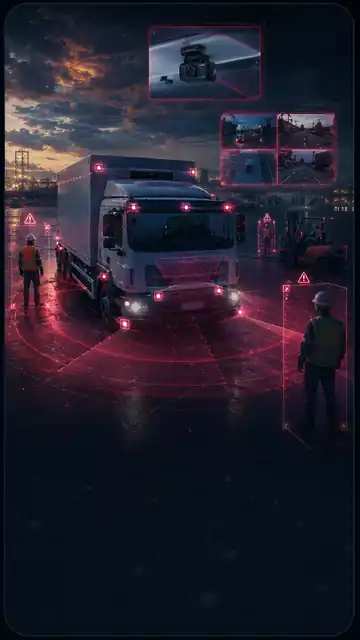
AI detection changes that workflow. When a person is identified inside a configured zone, the system can prioritise the relevant camera on the operator display and activate an audible and physical visual warning. The operator gets the right view at the point it matters, rather than having to scan every camera feed.
What happens when a person is detected?
- Detect: the AI camera identifies a person in a defined zone.
- Prioritise: the triggered camera becomes the operator's primary view.
- Warn: audible and physical visual alerts activate.
- Respond: the operator assesses the live image and follows the required safety procedure.
This sequence is deliberately operator-led. The system supports awareness and decision-making; it does not replace training or existing controls.
How many cameras does a GSE high loader need?
There is no useful one-size-fits-all answer. The Foresolutions system can support up to 12 camera views, with three AI-enabled cameras assigned to the targeted people-detection zones. Other cameras can cover the aircraft interface, transfer deck, platform movement and the wider load/unload operation.
The right design depends on the vehicle geometry, working height, operator position, the existing camera arrangement and the risks identified in the customer's operating process.
Where Foretrack Connect fits
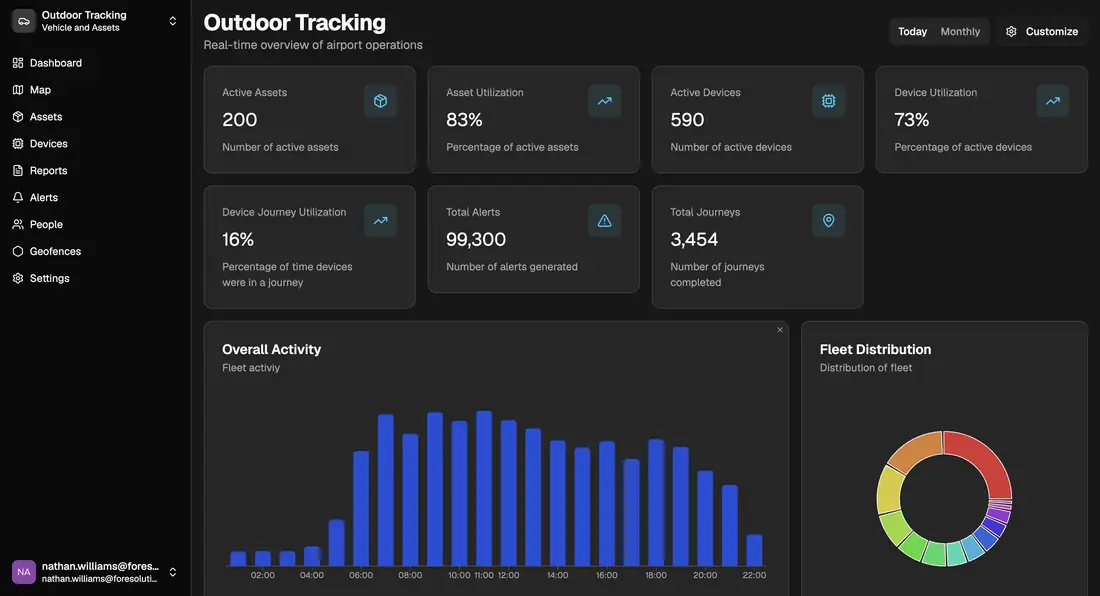
Camera safety solves an immediate visibility problem at the asset. Foretrack Connect addresses a different but complementary question: what is happening across the wider GSE operation?
For supported equipment, Foretrack Connect can provide live location, journey history, utilisation, geofences, alerts, fleet distribution and operational reporting. That means aviation teams can combine a high-loader safety intervention with a broader view of asset movement and fleet performance rather than creating another isolated technology silo.
Can an existing FMC lifter or high loader be retrofitted?
Potentially, yes — but it should begin with an asset assessment. Camera positions, detection areas, monitor behaviour and warning hardware need to be designed around the actual lifter and the way the team operates it.
A practical assessment should look at existing cameras, structure and blind areas, working heights, operator line of sight, typical personnel movement, electrical integration and how the vehicle approaches and interfaces with the aircraft.
What should aviation teams ask before choosing an AI camera system?
- Which areas of the high loader are genuinely difficult for the operator to see?
- Are we trying to detect people, aircraft proximity, objects — or a combination?
- What happens on the operator screen when a detection occurs?
- What audible or visual warnings are appropriate in the working environment?
- How will false or nuisance detections be controlled during configuration?
- Can the system be retrofitted without making the operator workflow harder?
- Do we also need wider GSE tracking, journey or utilisation data?
- What existing safety procedures remain mandatory after installation?
The objective: actionable visibility
The strongest use of AI cameras is not “more video”. It is making the relevant risk visible quickly enough for the operator to do something about it. For GSE high loaders, that means designing the camera layout around the equipment, targeting AI only where it adds value, and keeping the operator at the centre of the safety process.
See it. Detect it. Protect it.
Book a demonstration or arrange an assessment of one of your FMC lifters or GSE high loaders.
Frequently asked questions
What are the main camera blind spots on a GSE high loader?
The exact blind spots vary by asset, but common risk areas include the front bed as it moves near the aircraft, beneath the rear platform and the platform end. A site and asset assessment is needed before detection zones are configured.
Can AI cameras detect people around a high loader?
Yes. AI-capable cameras can be configured to identify people within defined detection zones and trigger an operator warning. Performance depends on camera placement, line of sight, environment and final configuration.
Is an AI camera system the same as an automatic anti-collision system?
No. AI people detection and operator warnings are different from automatic anti-collision or machine-control systems. The Foresolutions FMC AI Safety Camera System is positioned as operator assistance, not automatic machine stopping.
Why combine GSE cameras with telematics and tracking?
Video explains what the operator could see at the asset, while tracking and telematics add location, journey and fleet context. Used together, they can give safety and operations teams a more complete view of how GSE is being used.
This article references IATA Ground Support Equipment guidance, IATA Ground Ops Safety and IATA's May 2026 ground-handling update. Foresolutions product capability statements are based on the Foresolutions FMC AI Safety Camera System specification.