
See current or last-known location without relying on phone calls, spreadsheets or physical searches.
Digital Matter asset tracking · Foretrack Connect
Track the asset. Not just the vehicle.
An asset can be almost anything: a ULD, dolly, tow bar, set of mobile steps, generator, fuel bowser, trailer, compressor, pump, container or piece of plant. If the asset is large enough to safely carry a dedicated tracker, we can give it its own digital location and movement history.
Battery poweredNo hard-wiringForetrack Connect
ASSET VISIBILITYFORETRACK CONNECTLIVE
ULDAviation
GeneratorConstruction
Fuel bowserInfrastructure
Tow barGround operations
Last known locationMovementGeofenceBattery
Reduce wasted time looking for the equipment teams need to keep an operation moving.
Use movement, tamper and geofence events to surface unexpected activity.
Use movement and history to see what is active, idle, misplaced or repeatedly moving between locations.
Asset means almost anything
One tracking approach across very different operations.
We do not define an asset by sector. We define it by the operational problem: it moves, it gets misplaced, it is valuable, it sits idle, or the team needs a reliable record of where it has been. The tracker is then selected around the physical asset, environment and reporting requirement.
Ground support & airside assets
ULDs, baggage dollies, tow bars, mobile steps, trailers, cages and larger ground equipment.
Plant & site equipment
Generators, fuel bowsers, compressors, plant machinery, trailers, pumps and temporary equipment.
Mobile field assets
Pumps, generators, cable drums, bowsers, trailers, site equipment and deployable operational assets.
Assets moving through networks
Containers, trailers, cages, returnable equipment, mobile plant and larger handling assets.
Equipment spread across sites
Grounds equipment, bins, skips, carts, mobile machinery and shared operational equipment.
If a tracker can be fitted, start with the problem.
The possibilities are deliberately broad. Tell us the asset, where it moves and what you need to know.
Check an asset with us →The important bit: physical fit
Not every asset should carry the same device.
Digital Matter trackers are dedicated physical devices, so the asset needs enough suitable mounting space for the enclosure and a sensible installation position. That is why we do not promise that every tiny item should have its own GPS tracker.
Our fit ruleIf a rugged tracker can be mounted safely and reliably, this solution is a candidate. If the item is too small, too high-volume or needs a different type of visibility, we switch tracking method rather than forcing the wrong hardware onto it.
Too small for a dedicated tracker?Use BLE, tags and sensor-based tool tracking.Explore tools & BLE →
Need powered vehicle data?Use vehicle telematics for CAN, driver and richer powered inputs.Explore vehicle tracking →
Mostly inside a building?Use indoor tracking where room, zone or floor-level workflows matter.Explore indoor tracking →
Typical dedicated tracker footprintFrom compact to heavy-duty
Dimensions are shown to make the physical fit clear. Final device selection also depends on environment, connectivity, location method, reporting frequency and battery-life target.
Digital Matter device family
Choose the tracker around the asset.
Different enclosures and battery capacities let us scale from compact movable equipment to heavy assets expected to stay deployed for years. We configure reporting around the operational outcome rather than simply requesting the maximum number of location updates.
01
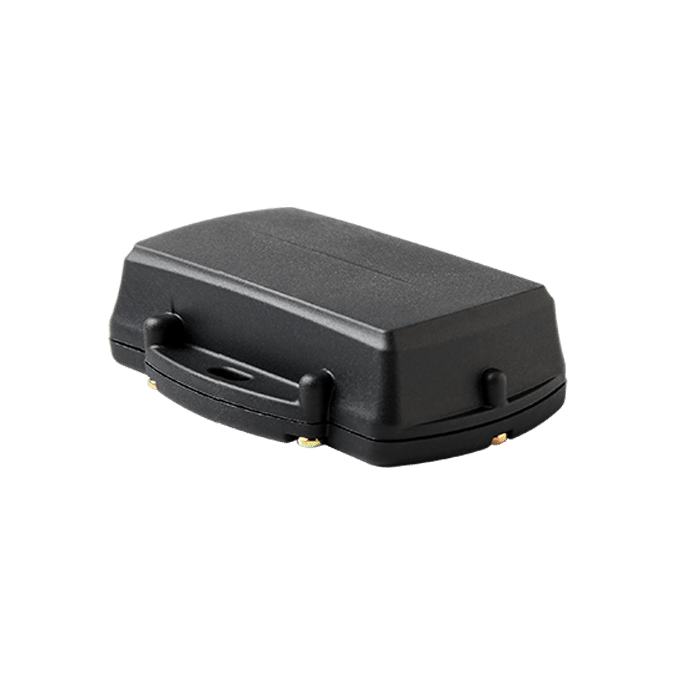
Compact asset tracking
Yabby Edge
84 × 63 × 24 mmFor assets where mounting space is tighter and indoor/outdoor location is useful.
02
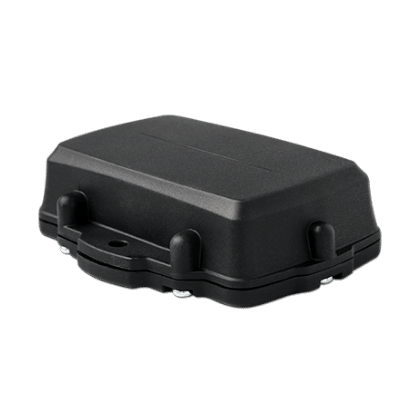
Rugged general-purpose tracking
Oyster3
108 × 86 × 30 mmA strong all-round choice for outdoor equipment, trailers, dollies and operational assets.
03
Location + Bluetooth gateway
Manta Fusion
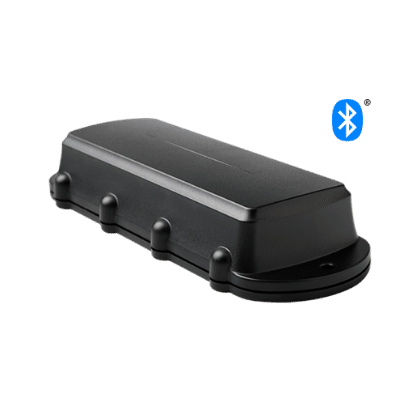
154 × 66 × 21 mmFor tracked assets that can also act as a gateway for nearby BLE tags and sensors.
04
Heavy asset / maximum battery capacity
Remora3
222 × 91 × 41 mmFor larger equipment, trailers and long-life deployments where a larger enclosure can be accommodated.
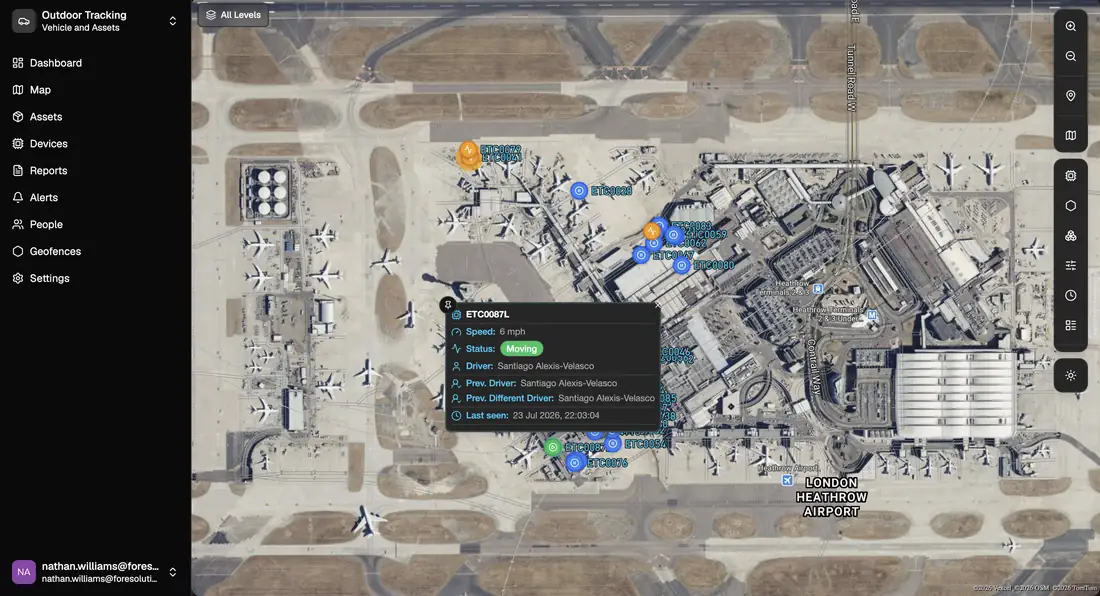
Movement history
Geofence alerts
Battery status
The tracker is only the start
Digital Matter underneath. Foretrack Connect on top.
The physical tracker creates the signal; Foretrack Connect turns it into something operational teams can use. That keeps asset visibility alongside the rest of the tracking estate instead of creating another isolated portal.
- Current and last-known asset position
- Movement and historical tracking
- Geofences and exception alerts
- Device and battery status
- Reporting and operational visibility
How we specify it
Start with the asset and the decision.
The same device configuration is not right for a tow bar, generator and container. We work backwards from what the operation needs to know, how often it needs to know it and where the asset actually spends its time.
What are we tracking?
Asset dimensions, material, value, environment, mounting options and whether the equipment already has a usable power source.
Where does it move?
Airside, construction site, road network, yard, depot, building, remote estate or a mix of indoor and outdoor environments.
What do you need to know?
Current location, last known position, movement, geofence entry/exit, utilisation, tamper, recovery or a historic movement record.
How often does it need to report?
Reporting frequency drives the trade-off between immediacy, network activity and battery life. We configure to the use case.
Asset tracking systems · GPS · BLE · indoor location
What is an asset tracking system — and which type do you actually need?
An asset tracking system gives operational teams a reliable way to identify where equipment is, where it has been and when something needs attention. The important decision is not simply which tracker to buy. It is whether the asset needs wide-area GPS location, lower-power BLE visibility, indoor RTLS, or a combination of technologies presented through one operational platform.
GPS asset tracking
For assets moving across yards, sites and road networks.
Battery-powered GPS/GNSS tracking suits equipment that can move over a wide geographic area and where current or last-known outdoor location, movement history and geofence events matter.
- Plant and larger equipment
- Trailers and mobile assets
- Airport GSE and operational equipment
- Generators, bowsers and deployable assets
BLE asset tracking
For higher-volume assets where proximity or zone presence is enough.
Bluetooth Low Energy can be useful when a dedicated GPS tracker is physically too large, unnecessarily expensive or too power-hungry for the question the operation is trying to answer.
- Tools and smaller equipment
- Vehicle or gateway proximity
- Site and zone workflows
- Mixed estates with many tagged items
Indoor RTLS
For buildings where room, floor or department visibility matters.
GPS is not designed for reliable room-level indoor location. Hospitals, campuses and complex estates usually need purpose-designed indoor infrastructure and tags around the accuracy the workflow actually requires.
- Hospital equipment
- Shared mobile assets
- Building and department visibility
- Complex indoor operational estates
RequirementBest starting pointWhy
Wide-area outdoor locationGPS / GNSS asset trackingDesigned for assets that can move between depots, sites, yards and wider geographic areas.
Small or high-volume equipmentBLE / tag-based trackingA lighter approach can answer presence and proximity questions without forcing a full GPS device onto every item.
Room, floor or department locationIndoor RTLSIndoor infrastructure is designed around building-level accuracy and search workflows that GPS cannot reliably provide.
Powered vehicle and driver dataVehicle telematicsUse a powered telematics architecture when the requirement extends beyond asset location into vehicle, driver, CAN or richer fleet data.
Mixed estateCombined architectureDifferent device types can answer different location questions while the operational view is brought together through the platform and workflow.
A better answer than “put GPS on everything”
When GPS asset tracking is not the right answer.
Good asset tracking design starts by choosing the minimum technology needed to make the operational decision. Foresolutions will not recommend a dedicated GPS tracker where a BLE tag, indoor RTLS design or vehicle-telematics solution is a better fit.
- The item is too small for a safe dedicated tracker.
- The asset never leaves a controlled indoor environment.
- The team only needs zone or proximity visibility.
- The requirement is primarily vehicle/driver data rather than asset location.
- The reporting frequency needed would make a battery-only design impractical.
Common questions
What counts as a trackable asset?
What can we track with this solution?
Potentially any movable or fixed operational asset that has enough suitable mounting space for a dedicated Digital Matter tracker. Examples include ULDs, dollies, tow bars, steps, generators, fuel bowsers, trailers, containers and larger plant or equipment.
Does the asset need its own power?
No. The core point of this solution is long-life battery-powered tracking without hard-wiring. It can also be used on powered equipment when an independent tracker is operationally preferable.
Can the same solution work indoors and outdoors?
Some Digital Matter Edge and Fusion devices combine technologies designed for assets moving between indoor and outdoor environments. Where a project needs room, zone or higher-density indoor accuracy, we may recommend the dedicated indoor tracking solution instead.
How long will the battery last?
Battery life depends on the device, battery type, reporting frequency, movement profile, temperature, installation and network conditions. We configure the reporting pattern around the operational need rather than quoting one battery figure for every deployment.
What if the asset is too small?
We do not force a GPS device onto an unsuitable asset. Smaller or very high-volume items are normally better served by BLE tags, sensors or another location method integrated into the wider tracking design.
Track it · Find it · Use it
What do you keep losing time looking for?
Tell us the asset, approximate size, where it moves and what you need to know. We will recommend the right Digital Matter device and show how it appears in Foretrack Connect.
Compare your options
Equipment tracking · GPS assets · mixed estates
Equipment tracking is strongest when every asset is matched to the right tracking method.
A construction plant item, a trailer, a tool and a hospital asset do not need the same hardware. Foresolutions separates the operational question first, then selects GPS, battery-powered tracking, BLE or indoor RTLS around power, movement, size, reporting frequency and location accuracy.
Non-powered
Battery GPS for assets without vehicle power
Use battery-powered tracking where trailers, equipment or mobile assets move across sites but cannot support a hard-wired telematics installation.
Plant & trailers
Track higher-value mobile equipment
Plant and trailer workflows typically need movement, last-known location, geofence and out-of-hours visibility rather than the same data depth as a powered fleet vehicle.
Tools & smaller assets
Use BLE when GPS would be excessive
For smaller, higher-volume items, proximity or zone visibility can often answer the business question more efficiently than a dedicated GPS device.
Proof + next step
Validate the use case before selecting the tracker.
Start with the asset list, movement pattern and operational cost. Then use the ROI tool, buyer resources and customer examples to decide whether a pilot is justified.
Need visibility of tools and smaller equipment? See tool tracking; for vehicles and fleets use vehicle tracking.
External validation
Foresolutions featured by Digital Matter.
Digital Matter documents how Foresolutions has used long-life battery-powered trackers to extend asset visibility into previously hard-to-track operational assets. Read the Digital Matter case study →