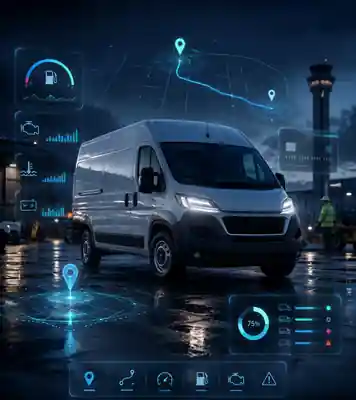
30Vehicles
- 18 Moving
- 3 Idling
- 7 Stopped
- 2 Alerts

Road fleets have a different challenge to vehicles working on a closed site. Drivers are moving between customers, depots and public roads while fuel, mileage, safety, service levels, maintenance and vehicle use all affect the cost of every journey. Foretrack turns that movement into information your team can actually act on.
Know where vehicles are, what they are doing and which driver or vehicle is best placed for the next job.
Use journey, mileage, idling and vehicle data to find unnecessary movement and inefficient use.
Surface speeding, harsh braking, acceleration and cornering so coaching can focus on real behaviour.
Use trip history, geofences, alerts and optional video to investigate incidents, visits and service queries.
The useful question is not simply “where is the van?” It is whether the right vehicle is on the right job, whether a customer can be given an accurate answer, whether mileage and idling are under control, whether drivers are operating safely and whether the fleet you already own is being used properly.
Find the nearest suitable vehicle, understand progress and make faster decisions when work changes during the day.
See the journeys and behaviours that drive unnecessary fuel use, wear and vehicle cost.
Move from anecdotal feedback to recorded speed, harsh events and driver-specific performance information.
Use arrival, departure and journey information to answer “where are they?” without repeatedly calling the driver.
Keep mileage and key maintenance dates visible so operational teams are not relying on separate spreadsheets.
Use geofences, curfews and movement alerts to surface out-of-hours use and unexpected vehicle activity.
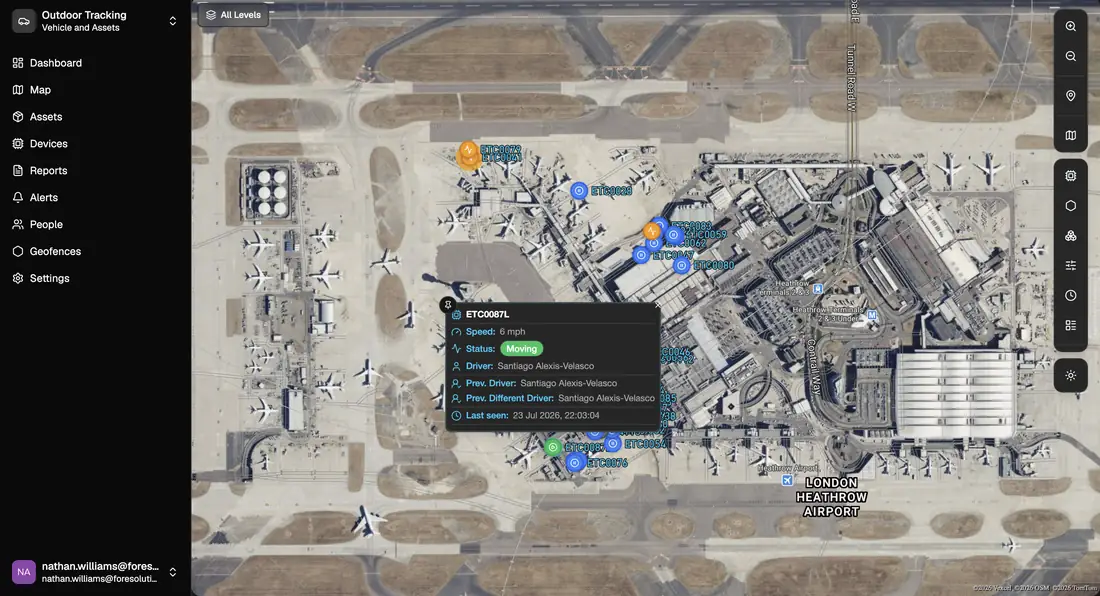
Foretrack combines live vehicle location with historic journey data, statuses, alerts and reporting. Fleet managers can move from the live map into the detail behind a vehicle, driver, trip or event without piecing together information from different systems.
The information, safety and control tools that help you run vehicles better every day.
See where every vehicle is right now.
Live map · status · nearest vehicleSpot speeding, harsh braking and risky driving.
Speed · braking · acceleration · corneringKnow when vehicles arrive, leave and dwell on site.
Arrival · departure · dwell · proof of visitReduce wasted fuel and improve fleet use.
Mileage · idle time · utilisation · journey trendsGet the exceptions and summaries that matter.
Real-time alerts · scheduled reports · exceptionsAdd video evidence and more roadside visibility.
Incident evidence · road view · connected eventsSpeeding, harsh acceleration, braking and excessive idling can increase risk, fuel use and vehicle wear. Foretrack gives managers a consistent record of those events so conversations with drivers are based on evidence rather than assumptions.
Use trends and exceptions to identify where coaching or operational changes will have the most value.
Tracking can tell you where a vehicle was, its speed and the events around a journey. Connected cameras add visual evidence for incidents, claims, driver support and road-risk investigation. Keep tracking and video connected rather than creating another isolated portal.
The hardware and data depth can change without changing the outcome: a clear operational view of vehicles, drivers, journeys and exceptions.
Nearest vehicle, time on site, journey evidence, accurate customer updates and less time phoning drivers for status.
Manage vans, pickups and HGVs moving between depots, sites and customers with driver and utilisation visibility.
Track trips, mileage, idling, driver activity, geofence events and richer vehicle data across longer journeys.
Group vehicles by team, allocate work more effectively and use scheduled reporting to support day-to-day management.
Understand which vehicles are closest, when teams arrived and how vehicles are being used across a wide service area.
Different vehicles can use different tracker and telematics configurations while staying visible through the same operational platform.
Talk through your fleet →PW Gates used Foretrack trailer tracking to improve visibility, utilisation, servicing and capacity planning. Their published case study reports £25k annual direct cost saving and an approximately 23× first-year return on investment.
Read the PW Gates case study →Foresolutions has deployed fleet tracking for estate and mobile service teams using driver-behaviour reporting, geofencing, scheduled reports and nearest-vehicle job allocation.
Customers have used Foretrack to replace driver phone updates with recorded journeys, improve routing visibility and combine tracking with camera evidence.
Standard and scheduled reports can be tailored around the operational questions your team needs to answer — not just the data a tracker happens to collect.
Yes. Foretrack provides live vehicle location and status through a web-based platform, with access designed for desktop, tablet and mobile use.
Yes. Historic journey data can be reviewed by vehicle and time period, with trip detail and movement replay available for investigating routes, visits and events.
Yes. The platform supports speed and driver-behaviour events including harsh braking, acceleration and cornering, with alerts and reporting to help managers review trends and exceptions.
Yes. Geofences can be created around customer sites, depots and other locations, with arrival, departure, dwell and occupancy information available for alerts and reporting.
Yes. Depending on the vehicle and hardware, we can add driver ID, CAN/vehicle information, Bluetooth sensors, connected inputs and camera/video telematics.
No. Cars, vans, HGVs and specialist road vehicles can need different data. We select the tracker and integration around what you need to know, while keeping the fleet visible through the same platform.
A useful demo should use your world, not a generic tracker presentation. Tell us how many vehicles you run, what types they are and what you most need to improve — visibility, cost, safety, customer service, utilisation or evidence.
What fleet telematics can show, how it supports safety and how tracking data becomes operational evidence.
A vehicle tracking system can show current and historical location, journeys, stops, geofence activity and selected vehicle or driver events depending on the installed hardware and available data. Foretrack Connect turns those signals into operational dashboards, alerts and reports.
Vehicle tracking focuses primarily on location and movement. Telematics can also include vehicle, driver or CAN-bus data such as ignition status, mileage, driving events, faults or other operational signals where supported by the vehicle and hardware.
Fleet tracking can support safer operations by identifying speeding, harsh events, route deviations or repeated risk patterns where the required data is available. It should be used as part of a wider safety process with clear policies and appropriate driver engagement.
Basic location may be enough for some fleets; deeper vehicle data or camera context is useful when utilisation, risk, claims or driver events matter.
Tell us what is wasting time, creating risk or making work harder. We’ll design the right solution around it.
Asset visibility Track it.•Find it.•Use it. Know where it is. Find what teams need. Keep valuable assets working.
Connected operations Connect it.•See it.•Control it. Connect people and systems. See what matters. Control the response.