
Guide people from arrival to the correct building, floor, department or room with fewer points of uncertainty.

Healthcare wayfinding
From hospital entrance to destination — every step clear.
Help patients, visitors and staff navigate complex healthcare estates with clear digital journeys across kiosks, web and mobile, designed around accessibility, changing routes and the reality of the hospital environment.
What it needs to solve
Make the journey easier without making staff the navigation system.
Wayfinding should reduce anxiety and repeated direction requests while giving estates teams a digital model that can be maintained as departments, entrances and routes change.
Reduce routine direction questions so reception, clinical and facilities teams can stay focused on their work.
Update destinations and route logic centrally when the hospital estate changes instead of relying only on static signage.
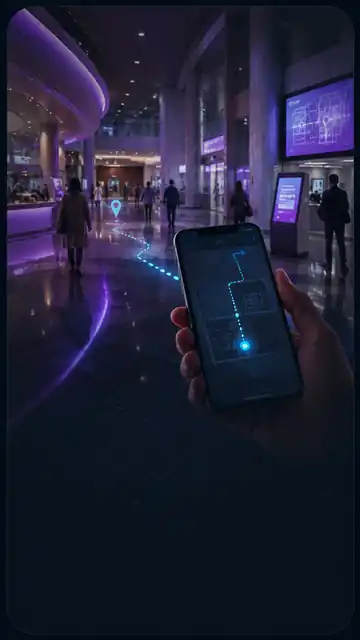
One maintained wayfinding layer
Map the estate once. Deliver the journey in the right places.
The same digital mapping and routing model can support different user touchpoints without creating separate navigation systems.
Interactive kiosksSelf-service navigation at entrances and high-traffic decision points.
Web and mobile journeysLet visitors plan before arrival or continue a route on their own device.
Accessible route logicDesign journeys around lifts, entrances, restrictions and mapped accessibility requirements.
Estate administrationKeep destinations and routes current as the hospital changes.
Technology & delivery
Technology underneath a healthcare journey — not the other way around.
Foresolutions owns the operational design and deployment. Mapping, kiosk and digital touchpoint technology is selected around the estate, users and governance requirements.
A digital mapping layer for search, destinations and responsive indoor routes across complex buildings.
Interactive on-site wayfinding hardware where self-service navigation needs a physical touchpoint.
Journey mapping, site survey, configuration, rollout, content governance and ongoing operational support.
Proof in operation
Healthcare wayfinding is already part of our operational estate work.
Our Darent Valley Hospital work demonstrates how digital wayfinding can sit alongside wider healthcare technology to reduce navigation friction for patients, visitors and staff.
Quick answers
Questions buyers usually ask first.
These are the practical decisions we work through before selecting the final platform, kiosk estate or rollout model.
Is wayfinding just a kiosk?
No. Kiosks can be one touchpoint, but the core is the maintained digital estate, destinations and route logic that can also support web and mobile journeys.
Can routes account for accessibility?
Yes. Route design can consider lifts, accessible entrances and other mapped constraints as part of the journey model.
Can it work with asset tracking?
Yes. They solve different workflows, but both can sit within a connected-estate strategy and use a common understanding of the physical environment.